



Thrive. For Life.

Thrive. For Life.
A child may discover a love for football during a school practice, find confidence while performing on stage, or realise that they enjoy speaking and debating through a school club. These moments may seem small, but they can influence how children understand themselves, their interests, and the things they enjoy doing.
School is not only about what happens inside a classroom. Extracurricular Activities in School give children opportunities to learn through practice, participation, and experience. They let children explore different interests while developing skills that become useful in academics and everyday situations.
Children learn in different ways, and extracurricular activities give them opportunities to discover their interests. Sports, music, dance, theatre, art, debating, and other activities encourage children to learn by doing rather than simply listening or reading.
A child may not know what they enjoy until they have the opportunity to try something. Exposure to different sports, creative activities and clubs allows children to experiment without the pressure of having to be good at something immediately.
Learning a new skill rarely happens in one attempt. A child practising a swimming technique, learning a musical piece or improving a sporting skill begins to understand that progress comes with patience and regular effort. This is one reason for the importance of sports in school education. Regular sporting experiences can help children develop discipline, focus, teamwork and the ability to keep working towards improvement.
Creative and literary activities offer children different ways to express themselves. Theatre, visual arts, music, debating and Model United Nations can encourage them to communicate ideas, listen to others and become more comfortable sharing their thoughts. Together, these experiences give children a wider school experience and allow them to discover strengths that may not always be visible through academic work.
For parents, the question is how these activities are integrated into school life and whether children have enough opportunities to explore, practise and progress.
Children should have access to different types of activities rather than being limited to one area. Sports, performing arts, visual arts, literary activities, clubs and leadership opportunities can give children the freedom to discover what interests them.
Good facilities can make regular practice more practical and enjoyable. Parents can look for dedicated sports grounds, courts, swimming facilities, creative spaces and other areas where children can participate safely and consistently.
Facilities are only one part of the experience. Experienced coaches, teachers and mentors can help children learn techniques correctly, understand the value of practice and gradually develop their skills.
For sports in particular, opportunities to learn from specialised coaches can make a difference as children move from simply participating to developing a genuine interest.
Activities become more meaningful when children have opportunities to put their skills into practice. Inter-house events, competitions, performances, clubs, exhibitions and student-led initiatives can give children experiences beyond regular practice.
An activity should not feel like a one-time experience. Parents can look for schools where children can continue developing an interest as they move through different grades, whether that means progressing to advanced sports training, performances, competitions, leadership opportunities, or specialised clubs.
At GD Goenka, The Flagship School, Vasant Kunj, students have opportunities to explore sports, performing arts, creative activities, literary pursuits, and leadership as part of their wider school experience.
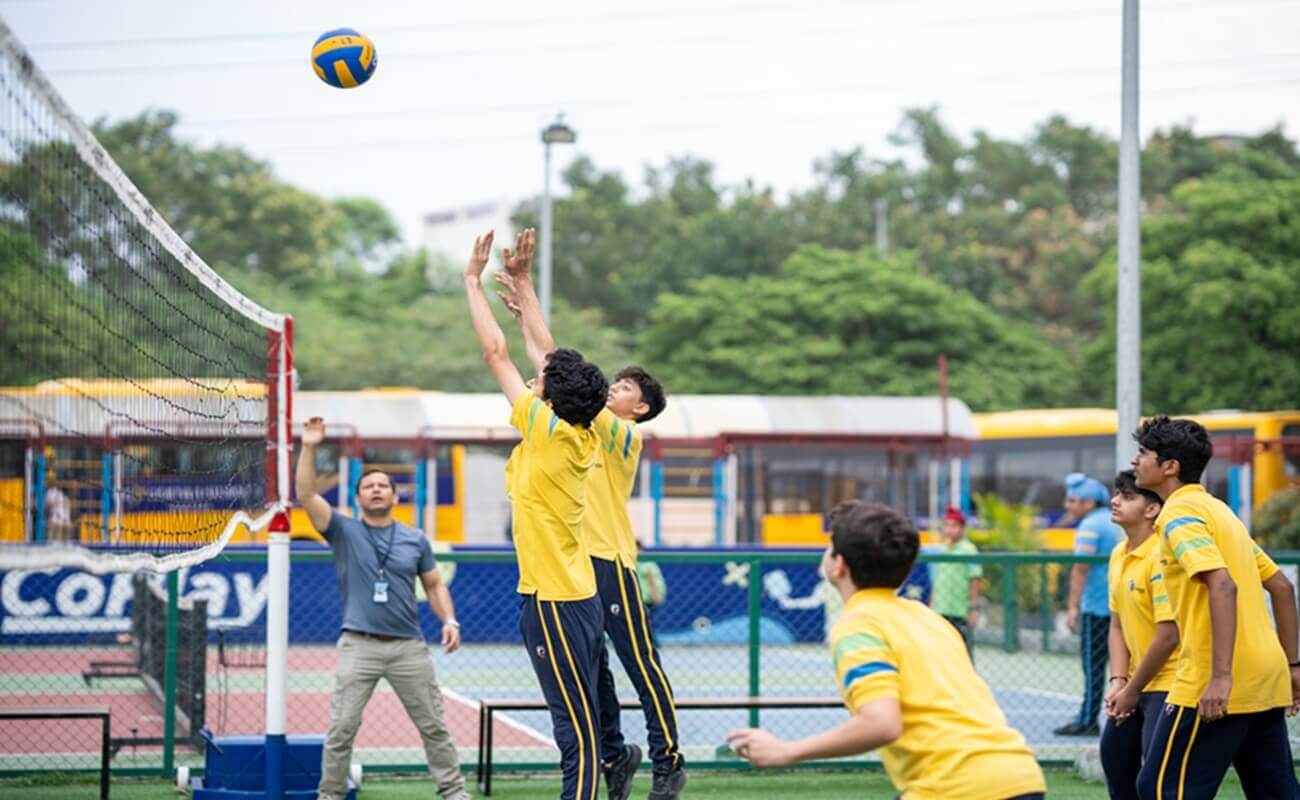
The Sports Arena provides spaces for several sporting interests, including a FIFA-approved 9x9 football turf, four cricket pitches with professional bowling machines, basketball and volleyball facilities, padel and pickleball courts, and a heated, covered half-Olympic-sized swimming pool. Students can also receive specialised coaching, including football training with LaLiga coaches and basketball training with NBA coaches.
There are opportunities to explore other sporting disciplines as well. A 10-metre shooting range with electronic target scoring gives students a setting in which concentration, precision and discipline become part of the learning experience.
The same breadth can be seen beyond sport. Students can explore Indian and Western music and dance, visual arts and theatre. Debating and Model United Nations provide opportunities to develop ideas and communicate them, while student-led clubs and the school publication, Voices, give students space to pursue interests in their own ways. The Goenkan Leadership Academy introduces communication, collaboration, critical thinking, and real-world projects. The value of such opportunities lies in the space, guidance, and continuity to find something they genuinely enjoy.
The benefits of extracurricular activities are often visible in small, everyday moments rather than in a single outcome.
Team sports, theatre productions, group performances and clubs require children to listen, share responsibilities and contribute towards something together. They begin to understand that their actions can affect the experience of others.
Trying out for a team, performing on stage, or participating in a competition can feel unfamiliar at first. With repeated opportunities, children can become more comfortable taking risks, making mistakes, and trying again.
Not every match is won, and not every performance goes perfectly. These experiences help children learn that disappointment is part of learning, and that improvement often comes from reflecting on what did not work.
Confidence develops when children have opportunities to do things for themselves. Completing a difficult swimming technique, performing before an audience, or contributing to a debate can give children a sense of achievement that encourages them to take on new challenges.
Perhaps the most personal benefit is discovering an activity that genuinely interests them. A child may find a passion for cricket, swimming, theatre, music, art, or public speaking simply because they were allowed to try.
A well-rounded school experience gives children opportunities to learn in different ways. Academic learning builds knowledge, while Extracurricular Activities in School create space for children to practise, perform, compete, create, and collaborate.
For parents exploring the best CBSE Schools in Delhi, extracurricular opportunities can be an important part of evaluating a school. The availability of varied activities, suitable facilities, experienced guidance, and opportunities for continued participation can tell parents a great deal about the experiences children may have beyond their lessons.
The importance of sports in school education is one part of this larger picture. When sports, creative activities, literary pursuits, and leadership opportunities are given meaningful space, children have more opportunities to discover their interests, build confidence, and develop skills through experience.